
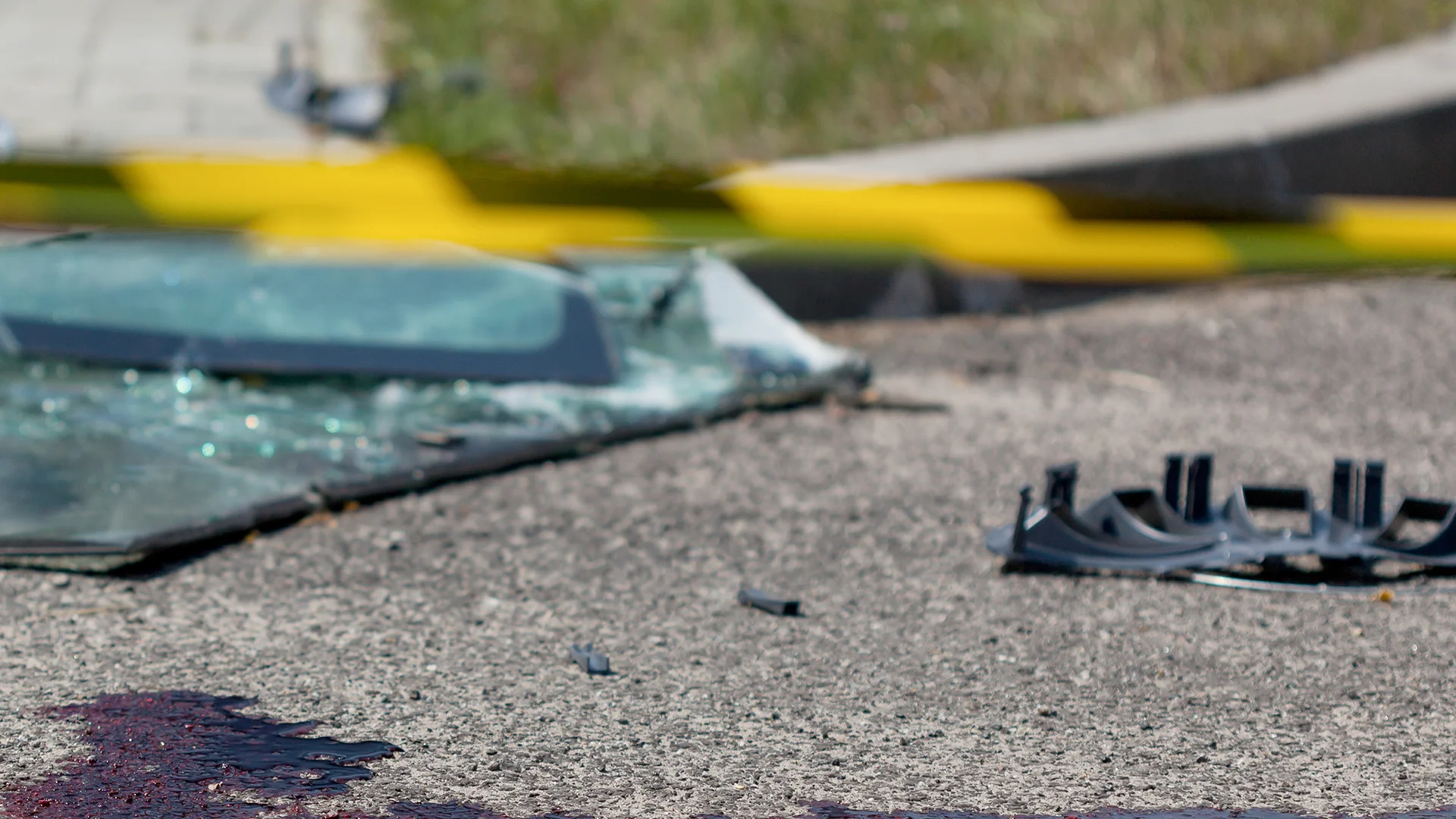
A driver rear-ends you at a light in Bayside, you get out, and the car is already gone. No plate, no name, and the assumption almost everyone makes in that moment is that there is nothing to claim.
That assumption is wrong, and this year our office recovered $200,000 for a client in exactly that position. The driver was never identified. Here is how the money came from somewhere else, and the conditions that decide whether it does.
What happened
Our client was stopped at a light when a car slammed into the back of him and drove off. There was no plate, no name and nothing to go on. He felt the impact and assumed he would be sore for a few days.
The back injury turned out to be serious enough that his doctors eventually recommended surgery. By then the practical question was no longer who hit him. It was who pays, when the person responsible has vanished.
When the driver disappears, there are two routes
The first is finding the driver. Cameras are everywhere now — storefronts, doorbells, traffic poles — and sometimes a plate turns up. The problem is time. Most private systems overwrite footage on a loop measured in days, so a request made three weeks later reaches a recording that no longer exists.
The second route surprises people, because it runs through their own insurance company. In New York every auto policy carries uninsured motorist coverage, known as UM, and a hit-and-run driver is treated as an uninsured driver. The claim is made against your own carrier for what the missing driver would have owed you.
What $25,000 covers, and what SUM adds
Basic uninsured motorist coverage in New York is $25,000 per person and $50,000 for two or more people in one accident. Those are the limits written into the prescribed endorsement, and they have not moved in a long time.
Alongside it sits supplementary uninsured/underinsured motorist coverage, or SUM — an optional add-on most people buy without noticing, usually matched to their own liability limits. SUM is where real money lives, and the gap between having it and not having it is enormous.
A worked example makes it concrete. Two drivers are rear-ended by a car that flees. Both are badly hurt, both need surgery.
- Driver A carries the state minimum and no SUM. No-fault pays medical bills and part of lost earnings to $50,000. For the injury itself, the ceiling is the basic UM limit: $25,000.
- Driver B carries 250/500 liability and bought SUM at matching limits. No-fault works the same way. For the injury, the claim can reach $250,000.
Same crash, same injury, same missing driver. The difference is a box ticked on a policy years earlier, and a $200,000 recovery sits comfortably inside the second column and nowhere near the first.
Three conditions decide whether your own carrier pays
This is the part that costs people their claims, and it is written down. New York prescribes the wording of the Uninsured Motorists Endorsement that sits in every policy, and its hit-and-run definition carries three requirements.
Physical contact. The endorsement defines a hit-and-run vehicle as one causing injury “arising out of physical contact” with you or with the vehicle you were in. A car that forces you off the road without touching you is not a hit-and-run under this wording, however clearly it caused the crash.
A report within 24 hours. The accident must have been reported “within 24 hours or as soon as reasonably possible” to a police, peace or judicial officer, or to the Commissioner of Motor Vehicles.
A sworn statement within 90 days. Within 90 days of that report, a statement under oath must be filed with the insurer, setting out that you have a cause of action against a person whose identity cannot be ascertained, and the facts supporting it.
Separately, the endorsement requires written notice of claim within 90 days or as soon as practicable. A phone call to report the accident is not the same thing as written notice of a claim, and carriers draw that distinction when it suits them.
Where hit-and-run claims go wrong
The police never came
This is the most common failure and the least discussed. You call 911 from the roadside, you are told a car will come, and no car comes — a routine outcome for a collision with no injuries visible at the scene and no vehicle to point at.
The endorsement does not care that you tried. It asks whether the accident was reported within 24 hours. If nobody attended, you report it yourself: at the precinct, or to the Commissioner of Motor Vehicles, that day. Write down where it happened, how it happened, and the name and number of anyone who saw it, because without a responding officer your own account and your witnesses are the whole record.
Notice went in by phone
People call their insurer, describe the crash, are told it is noted, and assume notice has been given. Months later the carrier takes the position that no written notice of claim was ever made. Put it in writing, keep the copy, and keep proof of when it was sent.
There was no contact, so there is no hit-and-run
Being run off the road by a driver who never touches you feels like the clearest possible case, and under this endorsement it is the weakest. Where contact is marginal — a mirror, a bumper scuff — photographs of the damage taken that day matter more than anything said afterwards.
The recorded statement came first
Your own carrier will ask for a recorded statement, and in a UM or SUM claim that carrier is the party that pays. It is adverse to you, however long you have been a customer and however courteous the adjuster is. Take advice before giving it.
The treatment record has holes in it
A UM or SUM claim only pays if you would have been “legally entitled to recover” from the driver who fled, which means proving the same case you would have proved against them. For pain and suffering that means meeting New York’s serious injury threshold under Insurance Law § 5102(d), and that is proved with imaging, measured findings and an unbroken course of treatment. Three weeks of missed appointments is not just a gap in care. It is a gap in the only part of the claim that pays for what the injury cost you.
The $25,000 was accepted as the ceiling
Carriers do not volunteer that SUM exists. Someone who is told their uninsured motorist limit is $25,000, and who does not know their declarations page carries SUM at ten times that, will take the $25,000 and sign a release.
One thing changed in May 2026, and how far it reaches is unsettled
New York narrowed the serious injury threshold for actions commenced on or after 26 May 2026, removing the 90/180 category — the route that let someone qualify by showing an injury prevented normal daily activities for 90 of the first 180 days. What survives is objective: fracture, significant disfigurement, permanent loss of use, permanent consequential limitation, significant limitation of use.
Whether that change reaches a UM or SUM claim is a fair question and not a settled one. These claims are usually resolved in arbitration rather than by commencing an action, and the amendments are written in terms of actions commenced. Practitioners on both sides expect the edges to be litigated. The safe working assumption is that the evidence now has to be objective either way, because a carrier evaluating a claim will apply the narrower standard whether or not a court ultimately says it had to.
Arbitration, not a courtroom
A UM or SUM dispute is generally decided by arbitration under American Arbitration Association rules, on the written demand of either side. Under Regulation 35-D the insured ordinarily chooses between arbitration and litigation, with the exception that where SUM limits equal the statutory minimum, either party can demand arbitration.
That matters for expectations. There is no jury, no courthouse and no public verdict. What there is instead is a hearing in front of an arbitrator, decided largely on the medical file.
Deadlines worth writing down
- 24 hours — report the hit-and-run to police, a peace or judicial officer, or the DMV
- 30 days — file the no-fault application, which pays medical bills and part of lost earnings regardless of fault
- 90 days — file the sworn statement with your insurer, and give written notice of claim
- 3 years — the general deadline to sue for personal injury in New York under CPLR 214(5), where there is someone to sue
What to do if a driver takes off
Call 911 and make sure a report gets made, and if no officer attends, make the report yourself the same day. Write down everything while it is fresh: the colour of the car, the make, any part of the plate, which direction it went.
Look around for cameras and note exactly where they are, so a request can go out before the footage is overwritten. Get medical care immediately, even if you feel able to drive home. And talk to a lawyer before giving your own insurance company a statement.
In our client’s case the driver was never identified, so the claim went under his own uninsured and supplementary underinsured coverage. It was built on his medical treatment, and it resolved for $200,000.
If this happened to you
A hit-and-run feels like the one situation with no answer, and it is usually the situation with more options than people expect. If you were hit by a driver who fled in Bayside, Whitestone, College Point, Flushing or anywhere in Queens, a free consultation will establish what coverage is actually on your policy and what the file needs to contain. Mark Kandkhorov handles these through the firm’s hit and run accident practice.
Kand Personal Injury Lawyers
215-15 Northern Blvd, Ste 3, Bayside, NY 11361
(718) 998-6788
Frequently asked questions
Can I claim if the driver who hit me was never found?
Yes. A hit-and-run driver is treated as an uninsured driver, so the claim is made against your own policy’s uninsured motorist coverage, and against supplementary underinsured motorist coverage if you carry it. You must meet the endorsement’s conditions, including reporting the accident within 24 hours and filing a sworn statement with your insurer within 90 days.
How much is uninsured motorist coverage in New York?
Basic uninsured motorist coverage is $25,000 per person and $50,000 for two or more people in one accident. SUM coverage is optional and usually matches your own liability limits, so it can be worth many times the basic amount. Your declarations page shows which you have.
What if the police never came to the scene?
Report it yourself the same day, at a precinct or to the Commissioner of Motor Vehicles. The endorsement asks whether the accident was reported within 24 hours, not whether an officer attended. Document the location, how it happened, and the details of any witnesses.
Does a hit-and-run claim require the other car to have touched me?
Under the prescribed New York endorsement, yes. A hit-and-run vehicle is defined as one causing injury arising out of physical contact with you or the vehicle you were in. A driver who forces you off the road without contact does not fit that definition, which is why photographs of even minor contact damage are worth taking immediately.
Will my premium go up if I make an uninsured motorist claim?
You were not at fault in a hit-and-run, and that is the relevant question for rating. The more useful thing to understand is that your carrier is the party paying the claim, so it will be evaluating your injuries the way any opposing insurer would.
This article is general information about New York law, not legal advice for any particular situation. Prior results do not guarantee a similar outcome.