
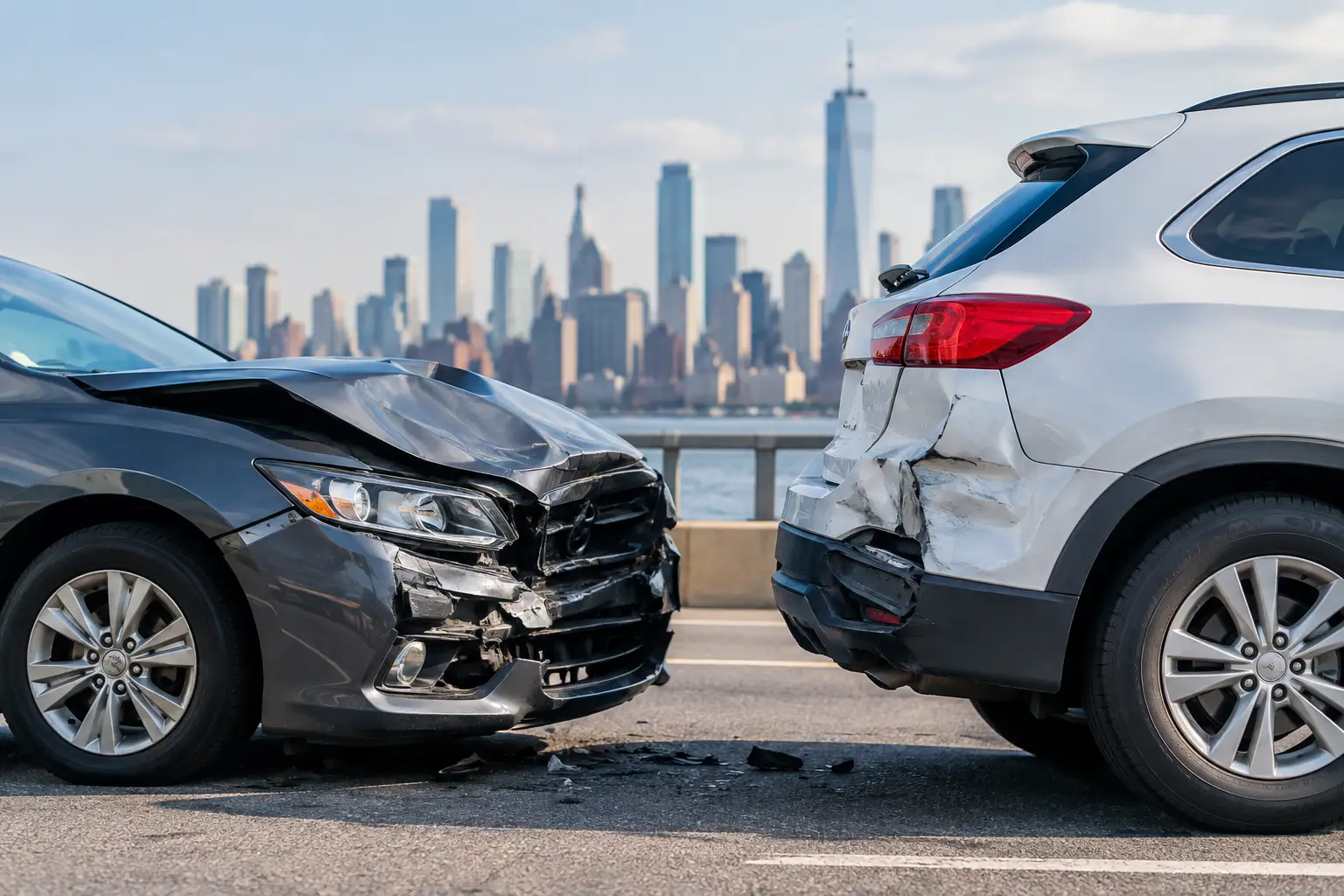
A crash can leave you with far more than a damaged vehicle. You may be facing emergency treatment, time away from work, pain that does not fade, and an insurance company already looking for ways to limit what it pays. Understanding the four types of crash damages can help you see the full scope of what an injury claim may involve – and why a quick settlement is often not enough.
In New York, the compensation available after a collision depends on the facts of the crash, the severity of the injuries, available insurance coverage, and whether you meet the state’s serious injury threshold. Every case is different. But the damages in a vehicle accident claim generally fall into four main categories: economic damages, non-economic damages, punitive damages, and wrongful death damages.
1. Economic Damages: The Financial Cost of the Crash
Economic damages, sometimes called special damages, cover losses that can be calculated with bills, records, invoices, and employment documents. They are the financial consequences of another driver’s negligence.
Medical expenses are often the largest part of this category. A claim may include ambulance transportation, emergency room care, hospital stays, surgery, diagnostic imaging, doctor visits, physical therapy, medication, medical equipment, and future treatment. Serious injuries can require care for months or years. A settlement should account for the treatment you will reasonably need, not just the bills that arrived in the first few weeks after the collision.
Lost income is another major economic loss. If injuries keep you from working, you may seek compensation for wages you have already missed. When a crash leaves a person with a lasting disability or limits the kind of work they can perform, the claim may also include diminished earning capacity. This is especially important for construction workers, drivers, tradespeople, small-business owners, and anyone whose livelihood depends on physical ability.
Other out-of-pocket losses can include travel to medical appointments, home modifications, household assistance, rehabilitation costs, and vehicle repair or replacement. Keep receipts and records. Small expenses can become substantial when treatment continues over time.
New York’s No-Fault Rules Can Affect Economic Recovery
New York’s no-fault insurance system generally provides certain basic benefits regardless of who caused the crash. These benefits may cover qualifying medical expenses, a portion of lost earnings, and necessary expenses, up to policy and statutory limits. The system is supposed to provide immediate help, but it does not cover every loss and it does not always last as long as an injured person needs it to.
When losses exceed available no-fault benefits, or when another party’s negligence caused serious injuries, a claim against the at-fault driver may be necessary. Insurance forms and deadlines matter. Delays can put needed benefits at risk, so getting legal guidance early can protect your options.
2. Non-Economic Damages: The Human Cost of an Injury
Non-economic damages, often called general damages, compensate for losses that do not come with a fixed price tag. They recognize that a serious injury changes more than a person’s bank account.
Pain and suffering is the best-known example. This may include physical pain from broken bones, spinal injuries, traumatic brain injuries, burns, nerve damage, or surgery. It can also include the pain expected in the future when an injury is permanent or requires ongoing treatment.
Emotional suffering may be part of the claim as well. Many crash victims experience anxiety, depression, sleep problems, fear of driving, or post-traumatic stress after a violent collision. These effects are real, particularly after a truck crash, pedestrian accident, motorcycle collision, or fatal incident involving a loved one.
A claim may also address loss of enjoyment of life. A parent who can no longer lift a child, an athlete who cannot return to a favorite activity, or a worker who lives with daily mobility limitations has suffered a loss that medical bills alone do not measure.
Serious Injury Is a Key Issue in New York
To pursue non-economic damages from an at-fault driver in many New York motor vehicle cases, an injured person must meet the state’s serious injury threshold. The law recognizes several qualifying categories, including fractures, significant disfigurement, permanent limitation of use, significant limitation of use, and injuries that keep a person from performing substantially all usual activities for at least 90 of the first 180 days after the crash.
Insurers frequently challenge this issue. They may argue that an injury was preexisting, that treatment gaps mean the injury was not serious, or that a victim recovered sooner than medical evidence shows. Strong claims are built with medical records, imaging, treating-provider opinions, employment evidence, photographs, and testimony that clearly shows how the injury disrupted daily life.
3. Punitive Damages: When Conduct Was Especially Reckless
Punitive damages are not awarded in every injury case. Unlike economic and non-economic damages, they are not primarily intended to repay the victim for a loss. They are meant to punish exceptionally reckless conduct and discourage similar behavior.
A drunk driver, a driver racing at extreme speeds, or a commercial company that knowingly ignored serious safety risks may create circumstances where punitive damages are considered. Still, bad driving alone is usually not enough. The conduct generally must show a willful, wanton, or outrageous disregard for the safety of others.
These claims require careful investigation. In a commercial vehicle case, for example, evidence may include driver logs, prior safety violations, internal company communications, maintenance records, dash camera footage, or proof that a company allowed an unqualified driver behind the wheel. In a drunk-driving crash, police reports, toxicology evidence, bar receipts, witness accounts, and criminal case records can all matter.
Punitive damages can increase the pressure on a defendant, but they should never be treated as guaranteed. The facts, available evidence, and insurance issues will determine whether pursuing them is realistic.
4. Wrongful Death Damages: Support for Families After a Fatal Crash
When a crash takes someone’s life, the legal claim is different from a standard personal injury case. In New York, a wrongful death action is generally brought by the personal representative of the deceased person’s estate on behalf of eligible family members.
Wrongful death damages can include funeral and burial expenses, medical bills related to the final injury, lost financial support, lost services the person provided to the household, and the value of parental guidance and care. If the person survived for a period after the crash, the estate may also pursue a separate claim for that person’s conscious pain and suffering.
New York wrongful death law has technical limits, and the value of a case can depend heavily on the deceased person’s earnings, role in the household, dependents, age, health, and the evidence showing what family members lost. No legal claim can replace a parent, spouse, child, or partner. But a properly prepared case can seek financial stability for the people left to carry the consequences of another person’s negligence.
What Evidence Helps Prove Crash Damages?
The value of a claim is not determined by an insurer’s first offer. It is determined by the evidence. Medical records should document symptoms, diagnoses, treatment, restrictions, and future care needs. Pay stubs, tax records, employer letters, and expert analysis can demonstrate lost income. Photos, journals, family testimony, and treatment records can show the day-to-day impact of pain and disability.
Evidence about the crash itself is just as important. Police reports, video footage, vehicle data, witness statements, cell phone records, and accident reconstruction may establish who caused the collision. In rideshare, delivery-vehicle, truck, bus, or MTA cases, multiple parties and insurance policies may be involved. Early investigation can prevent key evidence from disappearing.
Be cautious when speaking with an insurance adjuster. You can report a crash and seek necessary benefits, but you do not have to accept a low offer or give a recorded statement that minimizes your injuries. Insurers have teams protecting their financial interests. You deserve someone focused on protecting yours.
Do Not Let an Insurer Define Your Recovery
A crash claim is about the harm you have already suffered and the life you still have to live after the collision. At Kand Personal Injury Lawyers, injured people in Queens and across the New York area can speak with an attorney who investigates the facts, confronts insurance companies, and pursues compensation that reflects the real damage done. The legal burden should not fall on you while you are trying to heal.