
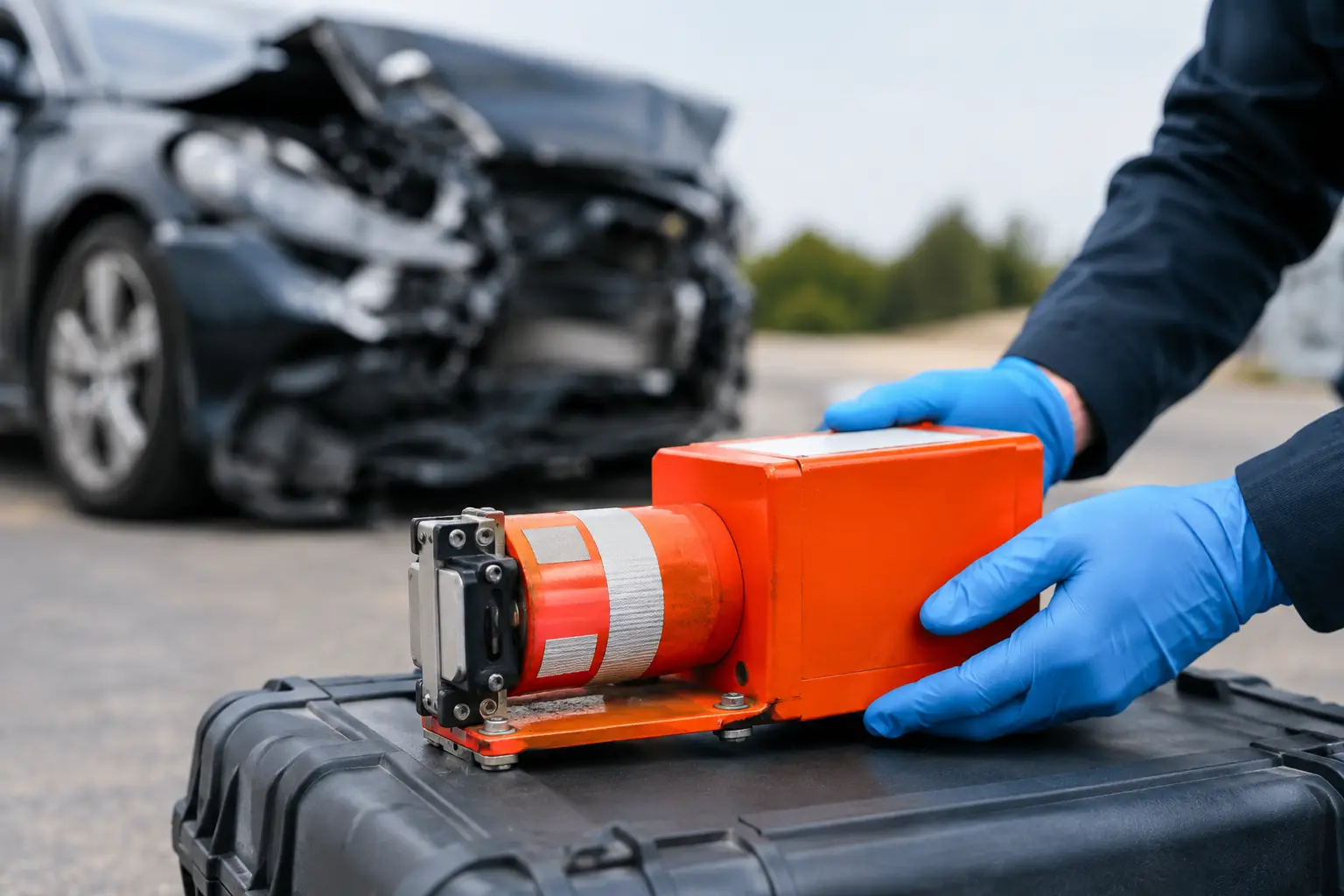
A serious crash can leave you focused on the ambulance, medical appointments, a damaged vehicle, and calls from insurers. But the vehicle involved may hold evidence that disappears with a single repair, tow, auction, or salvage sale. Acting quickly to preserve crash black box data can protect critical facts about what happened before impact – especially when the other driver denies fault.
For an injured person, this is not a technical exercise. It can be the difference between an insurer blaming you and having objective vehicle data that supports your account. A lawyer can move fast to put the vehicle owner, insurer, trucking company, or fleet operator on notice that the evidence must not be altered or destroyed.
What Is Crash Black Box Data?
Most modern cars do not have a “black box” in the same sense as an airplane. They often contain an event data recorder, or EDR, along with other electronic systems that may capture information around a collision. Depending on the vehicle, its equipment, and the type of impact, the available data may include vehicle speed, brake use, throttle position, steering input, seat belt status, airbag deployment, engine RPM, and the force or timing of the crash.
Commercial trucks, buses, delivery vehicles, and fleet vehicles can hold even more information. That may include electronic control module data, GPS records, dispatch communications, dash camera footage, driver logs, maintenance records, and telematics data. In a truck crash, the most useful evidence may not be limited to one recorder.
The data does not automatically prove who caused the collision. It must be properly downloaded, interpreted, and compared with physical evidence, witness accounts, police reports, photographs, and video. Still, it can provide an independent account when memories conflict or the other side tries to rewrite the facts.
Why You Must Preserve Crash Black Box Data Quickly
Electronic evidence is fragile in a practical sense. A vehicle may be repaired within days. An insurance company may declare it a total loss and move it to a salvage yard. A commercial owner may return a vehicle to service. Data can be overwritten, lost during repairs, or made harder to access after the vehicle changes hands.
That is why waiting for an insurance claim to “work itself out” can be costly. The other insurer has its own interests to protect. It may inspect the vehicles, take statements, and begin building a defense while you are recovering from injuries.
A prompt preservation letter can tell the party controlling the vehicle not to repair, sell, dismantle, alter, download over, or dispose of relevant electronic and physical evidence. The letter should be specific enough to identify the crash, the vehicles, and the categories of material that need to be retained. In more complex cases, an attorney may also seek a court order or take other legal action if there is a real risk that evidence will be destroyed.
The Vehicle You Were In Matters Too
People often focus only on the at-fault driver’s car or truck. Your own vehicle may also contain valuable evidence. Its data can help show the severity and dynamics of the impact, whether you braked, and how the collision unfolded.
Do not authorize a repair shop or salvage company to dispose of your vehicle without first considering whether it should be inspected. This does not mean you should delay necessary medical care or personally confront a tow yard. It means the vehicle should be treated as potential evidence until a qualified professional advises otherwise.
What to Do After a New York Collision
If you are physically able, take photographs of the vehicles, their positions, road conditions, debris, skid marks, traffic signals, and visible injuries. Get the names and contact information of witnesses. Save photos, videos, and messages in more than one place. If there may be nearby business, residential, traffic, or dash camera footage, time matters because recordings are often deleted on a routine schedule.
Then seek medical care and follow through with treatment. Gaps in treatment can give insurers an opening to question whether you were truly hurt, even when the crash was severe.
You should also avoid making assumptions in recorded statements. You can report the basic facts of the collision, but you do not need to accept blame, guess at speed, or minimize pain before you understand your injuries. Insurers are trained to look for statements they can use to reduce a claim.
Contacting a personal injury attorney early gives your legal team the chance to identify the vehicles, determine who controls them, and demand that evidence be preserved. This is particularly urgent after crashes involving tractor-trailers, MTA or private buses, rideshare vehicles, taxis, construction vehicles, and delivery fleets. Several companies may have records, and each may point the finger at someone else.
How a Preservation Letter Protects Black Box Evidence
A preservation letter is a formal written demand to retain evidence. It is not magic, and it does not guarantee that every piece of data will be available. But it creates a record that the responsible party was told to safeguard relevant material.
For a passenger car collision, the request may cover the vehicle itself, EDR or airbag control module data, photographs, repair estimates, and insurance inspections. For a commercial crash, the request can be broader. It may seek onboard computer data, dashcam footage, GPS and telematics records, driver qualification files, hours-of-service records, drug and alcohol testing documents where applicable, maintenance records, dispatch communications, and post-crash inspection materials.
The right request depends on the facts. A rear-end collision may center on speed, braking, distraction, and following distance. A truck sideswipe may require lane-position evidence, camera footage, driver logs, and company safety policies. A fatal crash may demand an immediate, wide-ranging investigation before key evidence is lost.
Do Not Try to Download the Data Yourself
Vehicle data extraction requires the right equipment and trained handling. Trying to access modules yourself can damage evidence, create disputes about whether the information was changed, or put you at risk around damaged electrical systems. Let qualified experts inspect the vehicle under controlled conditions.
Preserving the chain of custody matters as much as obtaining the data. Your legal team should be able to show where the vehicle was kept, who accessed it, what was downloaded, and how the information was handled. That helps prevent the defense from claiming the evidence is unreliable.
When the Other Side Controls the Vehicle
You may not be able to stop another driver’s insurer from moving their vehicle. You may not even know where it was towed. That is exactly why fast legal action matters.
An attorney can use the crash report, insurance information, vehicle registration details, and available records to identify the owner and carrier. When a business owns the vehicle, the investigation should also look beyond the driver. The employer, fleet manager, maintenance contractor, broker, or another company may control records that reveal unsafe driving, poor vehicle maintenance, unrealistic delivery schedules, or a history of violations.
New York claims can also involve strict notice requirements when a public authority or government-connected entity may be responsible. Waiting too long can jeopardize far more than electronic data. Do not assume that because the other vehicle says “city,” “transit,” or “government” on the side, ordinary claim deadlines apply.
Evidence Can Strengthen the Compensation You Pursue
Strong evidence helps establish liability, but it also helps show why your injuries should be taken seriously. A hard-impact crash supported by vehicle data, photographs, expert analysis, and medical records can counter an insurer’s effort to call your injuries minor or preexisting.
Depending on the case, compensation may include medical expenses, future treatment, lost income, reduced earning ability, pain and suffering, and other losses caused by the collision. Families grieving a fatal crash may have a wrongful death claim. The available recovery depends on the facts, insurance coverage, and New York law.
Kand Personal Injury Lawyers investigates serious vehicle crashes with the urgency they demand. We take on the legal burden, press responsible parties to preserve evidence, and fight insurers that try to shift blame onto injured people.
If a crash has already happened, do not wait for a repair shop, tow yard, insurer, or fleet company to decide what happens to the vehicles and records. Get medical care, protect what you can, and speak with an attorney who can act before the evidence that tells your story is gone.