
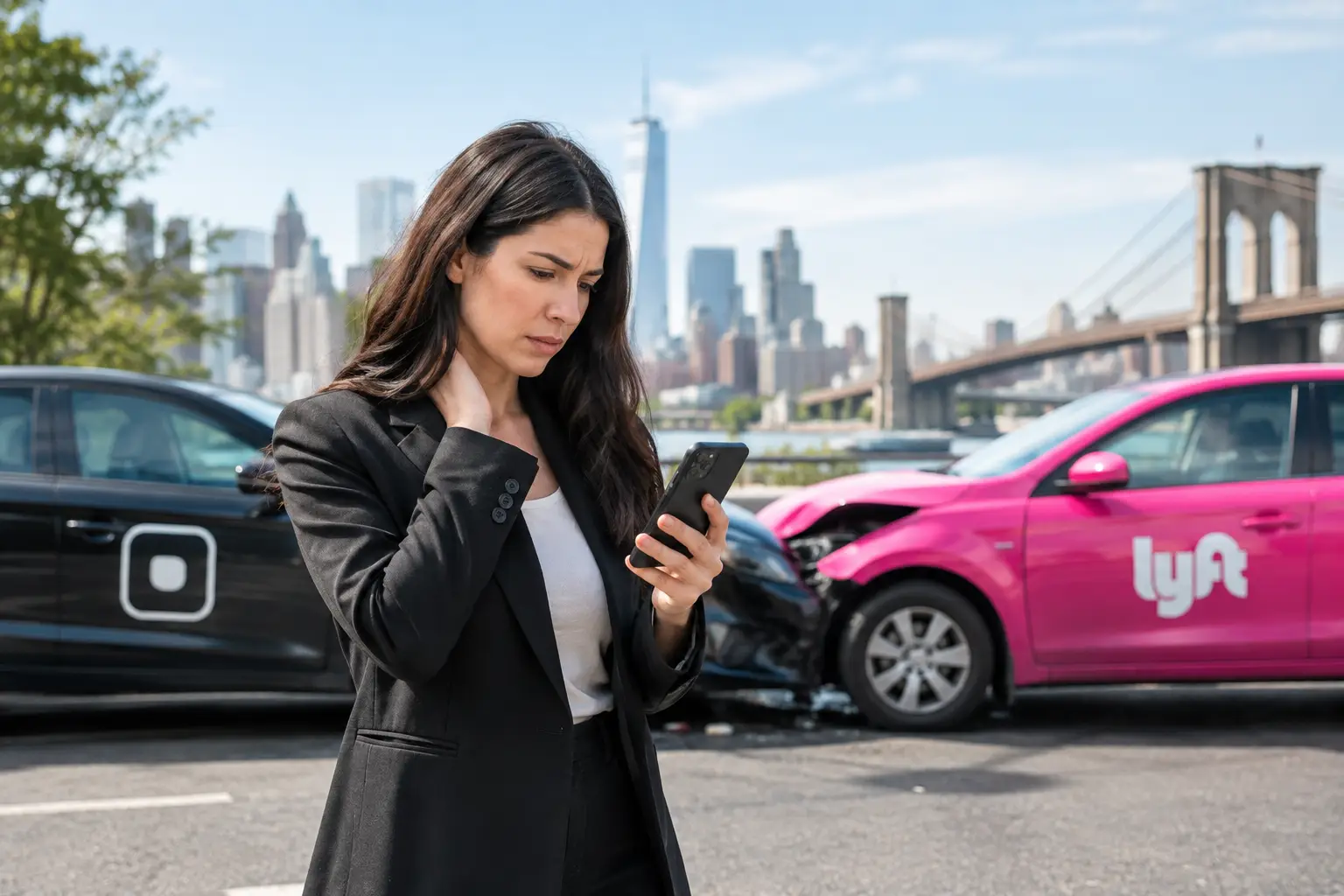
A rideshare crash can leave you hurt, unable to work, and facing insurance companies that all point to someone else. Uber versus Lyft accident liability is not decided by the logo on the car. In New York, the answer often turns on what the driver was doing in the app at the exact moment of impact, who caused the collision, and which insurance policy must pay.
That distinction matters. A passenger injured while heading home from JFK may have access to very different coverage than a person struck by the same driver while the app was off. The insurers know this. They may move quickly to limit their exposure before you understand the full cost of your injuries.
Uber Versus Lyft Accident Liability: The Core Issue
Uber and Lyft operate under similar rideshare insurance rules in New York. Neither company automatically accepts responsibility for every crash involving a driver who happens to use its platform. Coverage usually depends on the driver’s status at the time of the accident.
The key question is not simply, “Was the vehicle an Uber or Lyft?” It is, “Was the driver logged in, waiting for a request, on the way to pick up a rider, or transporting a passenger?” App records can answer that question, but those records are controlled by the company. Preserving them early can be critical.
A rideshare claim may also involve several liable parties. The Uber or Lyft driver may have made an unsafe turn. Another motorist may have run a red light. A vehicle owner, employer, commercial carrier, or even a municipality responsible for a dangerous roadway condition could share fault. A serious injury case should investigate every available source of compensation rather than accept the first insurer’s version of events.
Insurance Coverage Depends on App Status
New York requires transportation network companies such as Uber and Lyft to maintain insurance coverage that changes with the ride’s status. The available coverage can be substantial, but access to it is not automatic.
The driver was not logged into the app
If the driver was offline and using the car for personal reasons, the driver’s personal auto insurance is generally the first policy involved. Uber and Lyft coverage usually does not apply simply because the person drives for the platform at other times.
This can create problems when a driver carries only minimum coverage or has a policy exclusion related to rideshare use. It does not mean an injured person has no claim. It means the investigation must identify all policies, all vehicle owners, and any other negligent parties.
The driver was logged in and waiting for a ride request
When a driver is available in the app but has not accepted a trip, contingent rideshare coverage may apply if the driver’s personal insurance does not fully cover the loss. Under New York law, this period generally carries at least $75,000 for bodily injury to one person, $150,000 for bodily injury per accident, and $25,000 for property damage.
The details matter. An insurer may argue the driver had not yet logged in, had gone offline, or was not actually available to accept rides. App data, trip logs, phone records, and the driver’s own statements may become central evidence.
The driver accepted a trip or had a passenger in the vehicle
Once a driver accepts a ride request and while the passenger is being transported, New York requires far greater coverage. Uber and Lyft generally provide up to $1.25 million in liability coverage during this active-trip period, along with required uninsured and underinsured motorist protection.
For an injured passenger, this is often the clearest coverage situation. But clear coverage does not guarantee a fair settlement. The insurer will still examine medical records, prior injuries, treatment gaps, fault allegations, and whether the injuries meet New York’s serious injury threshold for pain-and-suffering damages.
Who Can Bring a Claim After a Rideshare Crash?
Rideshare passengers are not the only people who may have a claim. The same collision can injure a driver, a passenger in another car, a pedestrian, a bicyclist, or a scooter rider. Each person’s available insurance and legal options may differ.
New York’s no-fault system generally provides initial medical and lost-wage benefits to eligible people injured in a motor vehicle accident, regardless of fault. These benefits are time-sensitive. Missing the notice deadline can put needed coverage at risk, even while a larger injury claim is still being investigated.
To recover for pain, suffering, and other non-economic losses in many New York motor vehicle cases, an injured person must establish a serious injury under state law. Fractures, significant limitations, permanent consequences, and injuries that keep someone from performing usual activities for a substantial period can support that claim. The analysis is medical and fact-specific. Do not let an insurance adjuster make the final call based on a rushed review of records.
Fault Is Often More Complicated Than It Looks
A rideshare driver may be distracted by navigation instructions, checking for a new request, or rushing to reach a pickup location. Yet the rideshare driver is not automatically at fault. New York’s comparative negligence rules allow more than one party to bear responsibility for a crash, and in motor vehicle injury cases, a person found more than 50% at fault is barred from recovering damages.
For example, a Lyft driver may be speeding through an intersection when another driver makes an illegal left turn. Both drivers could be blamed. If you were a passenger, the dispute between those drivers should not become your burden. Your claim may proceed against every party whose negligence contributed to your injuries.
Uber and Lyft may also argue that their drivers are independent contractors. That can affect certain legal theories, but it does not erase the insurance coverage required for active rideshare trips. It also should not stop a full investigation into the driver’s conduct, the company’s records, and the coverage available under New York law.
Evidence Can Disappear Quickly After an Uber or Lyft Crash
The police report is a starting point, not the entire case. It may contain mistakes, incomplete witness information, or no clear explanation of the driver’s app status. A strong claim can require a faster and broader investigation.
Useful evidence may include the rideshare receipt, screenshots showing the trip, photographs of vehicle damage and the scene, dash camera footage, surveillance video, witness statements, medical records, and electronic data from the vehicles. The app’s trip history can be especially valuable because it may establish whether the ride was active and when the driver accepted it.
If you were a passenger, save every message and receipt connected to the ride. If you were hit by a rideshare vehicle, write down what you observed, including any Uber or Lyft decals, the driver’s statements, and whether a passenger was inside. Seek medical care promptly. Some injuries, including concussions, soft-tissue damage, and spinal injuries, become more apparent after the shock of the crash wears off.
Do not give a recorded statement or sign broad medical authorizations just because an insurer asks. An adjuster’s job is to protect the insurer’s bottom line. Your job is to protect your health and your future.
Compensation Should Reflect the Full Cost of the Crash
A fair recovery is not limited to an emergency room bill. Depending on the facts, compensation may include medical treatment, rehabilitation, lost earnings, reduced future earning ability, pain and suffering, and the cost of long-term care. When a loved one is killed, surviving family members may have a wrongful death claim for the financial losses the family has suffered.
The value of a claim depends on the injuries, available insurance, proof of fault, medical prognosis, and the effect on daily life. A settlement offer made before a diagnosis is clear may leave you paying for future treatment yourself. That is why accepting quick money can be a costly decision.
Get Answers Before the Insurers Control the Story
Uber versus Lyft accident liability is rarely a simple one-policy question. The right claim may involve the driver’s insurer, Uber or Lyft coverage, another driver’s policy, no-fault benefits, and uninsured or underinsured motorist coverage. Deadlines apply, and the evidence needed to prove app status and fault may not remain available forever.
Kand Personal Injury Lawyers represents injured people across Queens and the greater New York area. We take on the investigation, insurance pressure, and legal burden so you can focus on healing. There is no legal fee unless we win. If a rideshare crash changed your life, get clear answers early and protect the claim you may need for your recovery.